The workplace is in the middle of a transformation unlike anything we’ve seen before. Hybrid work, flexible schedules and shifting employee needs are making the traditional office model increasingly outdated. With all these changes, one question remains: how can you plan for the future of your workspaces when so much is uncertain?
The answer lies in data. The future will always be unpredictable, and few organizations foresaw how quickly hybrid work would reshape the office. But there are steps you can take to be well prepared for whatever changes come next.
Data shows you how your workplace is being used today. With that knowledge, you can prepare your facilities for whatever the future brings, which is why data-driven facility management is the first step in future-proofing your workplace.
Why data-driven facility management matters in uncertain times
The desire to predict the future is natural, especially when managing workplace facilities where flexibility has become the norm. Unexpected events will always disrupt predictions, but data remains a powerful tool for shaping how you respond to change.
Collecting and analyzing data gives you objective, quantitative insight into your workplace, and there are many ways to approach it. Occupancy sensors or observation studies measure workplace occupancy, while employee surveys assess how satisfied people are with their work environment.
Data shows you what’s happening in your organization right now, and how it might change in the future. But collecting it is just the beginning.
Turning workplace data into actionable insights
To make data collection useful, you need to combine insights from different sources. Comparing room size with occupancy rates, for example, can show which room layouts work best for your organization. Adding survey data on employee preferences then shows how to optimize those spaces for both productivity and well-being.
Using a range of data sources gives you a complete view of how your facilities are used. That level of insight lets you make decisions that improve space efficiency and employee experience at the same time.
Identifying workplace trends for better planning
Another advantage of data-driven facility management is the ability to spot trends. Tracking data over time reveals daily, weekly, monthly and yearly patterns that reflect your organization’s unique rhythms.
Daily arrival times might shift gradually, for instance, pointing to a cultural change in how employees use the office. Or you might see different occupancy patterns across teams throughout the year. Both help you plan workspace allocation and adapt to evolving ways of working.
Visualizing workplace data for greater clarity
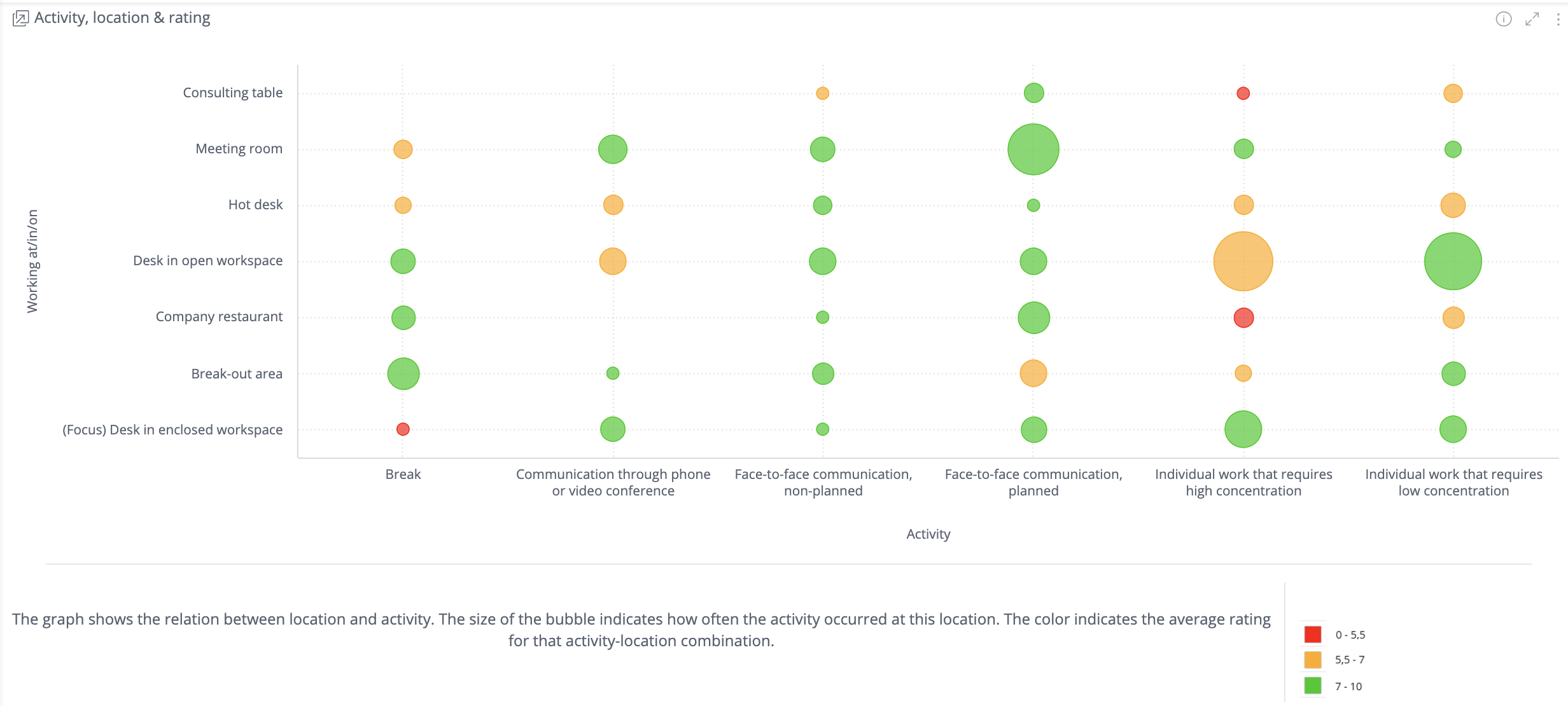
Numbers alone don’t tell the full story. To truly understand your workplace, you need to see the data in graphs, charts and dashboards, presented in a clear and digestible way.
Interactive tools put you in control of your data. You can drill down into specific data points, filter by floor or team, and focus on the information that matters most.
Overall occupancy trends are useful, but filtering to compare specific areas, like meeting rooms versus individual workstations, gives you a much clearer understanding of how space is used at a granular level.
Benchmarking your workplace against others
Understanding your own organization is crucial, but it’s just as important to see how you compare with similar organizations. Benchmarking lets you compare your facility data with anonymized data from other companies, giving you a clearer view of industry trends.
Trends at other organizations, especially negative ones, can be particularly revealing. If a similar organization saw employee satisfaction drop as the number of meetings rose, for example, that’s a signal to watch your own meeting load closely.
Knowing how your organization measures up helps you identify areas for improvement and make sure you don’t miss trends that could affect your future workplace strategy.
Why data needs human context
Data is an invaluable tool, but it can’t tell you everything. It should always be evaluated in context, which is why the human element is key. Combining data with context helps you understand the things that are hard to measure.
Political shifts, management changes or market trends can change your organization dramatically. Data should be used as a tool, not as the sole source of truth. Interpreting it thoughtfully gives you a stronger grip on your organization and the changes that could affect it.
Future-proofing your workplace with data
You can’t predict the future with complete certainty, but you can prepare for it. By using data-driven insights, tracking trends and benchmarking against others, you can adapt your workplace to the evolving needs of your organization before those needs become problems.
The future of workplace facilities may be uncertain, but with the right data and tools, you can make decisions that lead to more efficient, flexible and productive workspaces. The future isn’t just something that happens to you. It’s something you can shape.