Facility management has never carried more weight than it does right now. Regulations are tightening and carbon targets keep rising, while organizations are being asked to prove they can do more with the assets they already own.
For anyone working in facility management, that shift is not a distant trend. It already changes how people run offices, how they purchase furniture, and how they maintain buildings.
This guide covers why circularity matters in facility management, what it looks like in practice, and how a workplace asset inventory makes it possible.
Why facility management is central to circularity
According to the Dutch Public Procurement Expertise Centre (PIANOo), facility management directly influences a company’s circular performance. Since the end of 2020, socially responsible procurement has become standard practice among Dutch government organizations. Facility managers now need to factor circularity and social responsibility into everyday procurement decisions.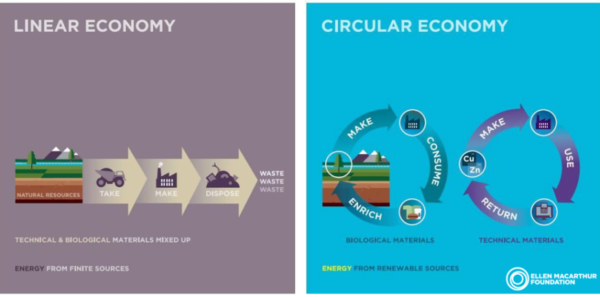
Peter Holtrop, a facility manager at DJI, put it simply: “Second-hand means second chance.” Refurbishing existing assets instead of buying new ones can generate real carbon savings, which puts facility managers in a key position to drive this change. In the coming years, both public and private procurement teams will likely adopt the same circular approach.
The climate targets driving the shift
The European Union has committed to becoming climate neutral by 2050, with 2030 as a checkpoint to review progress. The EU raised its 2030 emissions reduction target from 40% to at least 55%. That change puts pressure on every industry, including facility management, to raise its ambitions.
The building industry is a major part of that equation. It generated 38% of global carbon emissions in 2020, broken down roughly as follows:
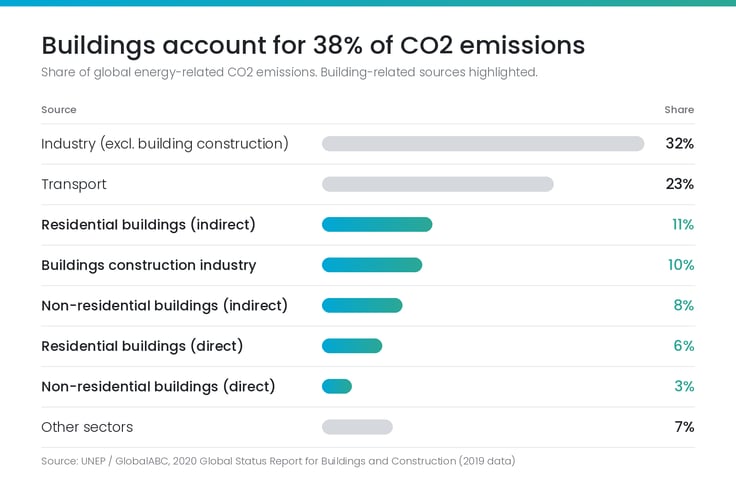
Based on the World Green Building Council’s 2019 target, the industry is expected to cut embodied carbon by at least 40% by 2030. Facility management teams should start adapting their procurement and asset management practices well ahead of that deadline.
The business case for circularity: cost and carbon savings
Circularity in facility management is not only about being green. It is equally a financial issue, which is precisely why it belongs on the CFO’s radar as much as the facility manager’s.
A 2017 CE Delft report looked at Dutch central government offices. It found that office furniture causes 95% of a typical office’s climate impact, with floor covering and paint making up most of the remaining 5%. Office chairs, in particular, carry the biggest footprint of any single item.
The difference between buying new furniture and choosing refurbished is dramatic:
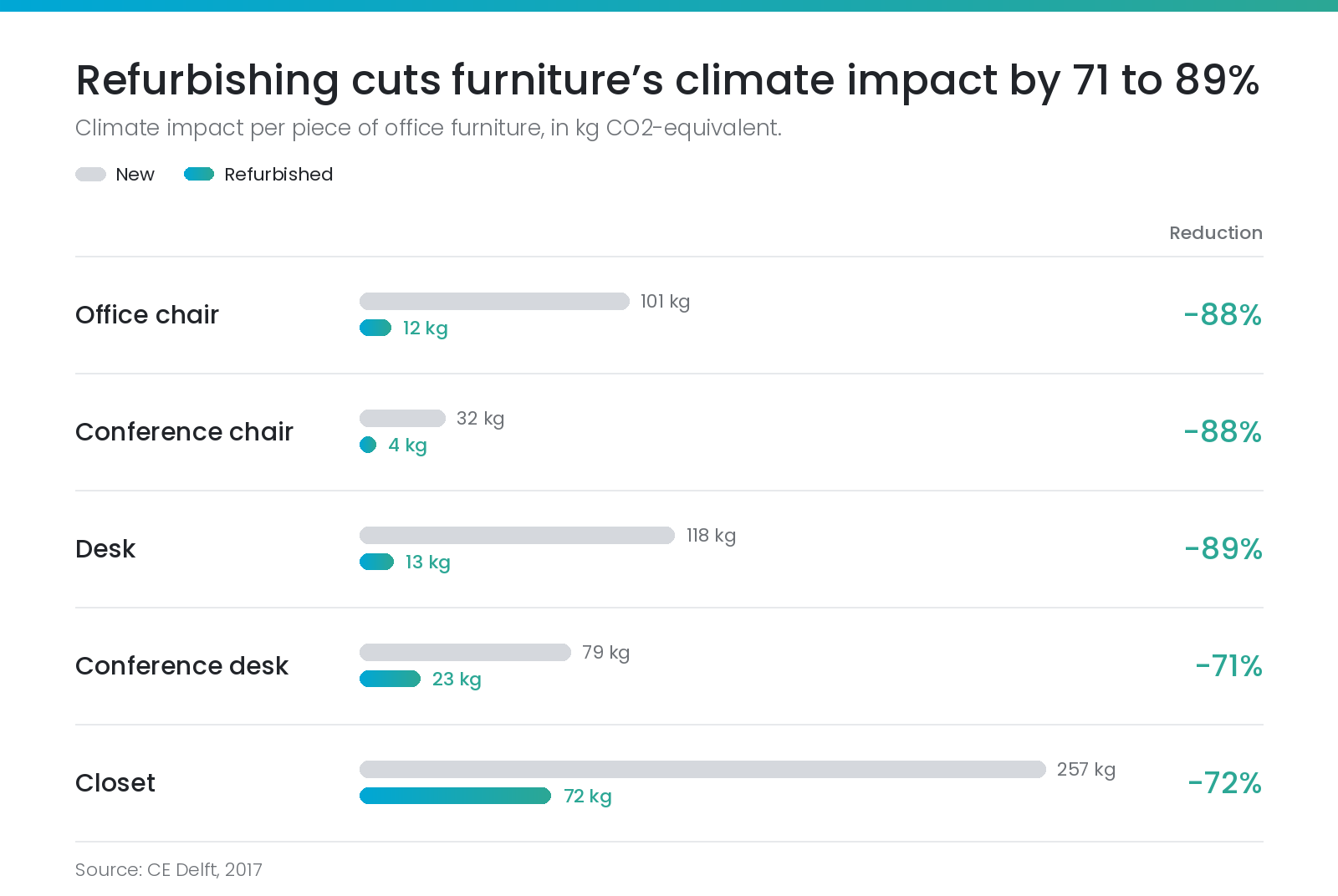
Numbers like these are easy to overlook on a spreadsheet. They become more tangible when you translate them into something like kilometers of air travel avoided or years of tree growth saved. That kind of framing tends to resonate with employees and the public, and it gives facility management teams a stronger story to tell internally.
On top of the environmental case, refurbished and leased assets usually cost less to buy and maintain. This is often the argument that gets a CFO’s attention fastest.
What is a workplace asset inventory?
None of this is possible without first knowing exactly what an organization owns. A workplace asset inventory documents every asset in a building.
It records each asset’s condition, such as poor, average or good, along with its location by building, floor, zone and room number. It can also include the brand, model, color, size and overall completeness.
This is the single most important building block of circular facility management. Without an accurate inventory, it is hard to plan investments, apply socially responsible procurement, or know which items to refurbish or replace.
Common asset inventory challenges
The biggest challenge for organizations is not collecting the data, but knowing what to do with it afterward. Set a clear goal before the inventory begins, otherwise the information sits unused. Gathering the right inputs, like full floor plans or square footage by building, can also be harder than expected, especially across multiple locations.

Where an asset inventory adds value
Once an inventory is in place, it becomes the foundation for financial and circularity planning. Many organizations are surprised to learn they do not know how many assets they own, or what condition those assets are in.
With this information mapped out, facility management teams can build a stronger financial plan. They can see where second-hand or refurbished assets make sense and plan future investments with more confidence.
One organization completed a full asset inventory across more than 60 locations, which let it track every asset entering and leaving its facilities. An internal team processed changes as they happened, and independent checks kept the data accurate over time.
The changing role of the facility manager
Circularity is reshaping the role of the facility manager in three distinct ways.
First, it moves facility managers into a strategic role rather than a purely reactive one. Instead of simply responding to maintenance requests, they need to think about long-term asset use.
Second, organizations are shifting from cost-driven to value-driven decision making. Facility managers need to consider the broader impact of a decision, not just its price tag.
Third, the facility manager now acts more as a resource manager, overseeing how materials, supplies and equipment move in and out of the building. This includes what leaves under the waste contract.
These changes add responsibility, but they also raise the profile of facility management within the organization. A facility manager who can discuss asset value, environmental impact and long-term planning becomes a more strategic voice, and colleagues, leadership and the wider organization all benefit.
Circularity principles in facility management: beyond recycling
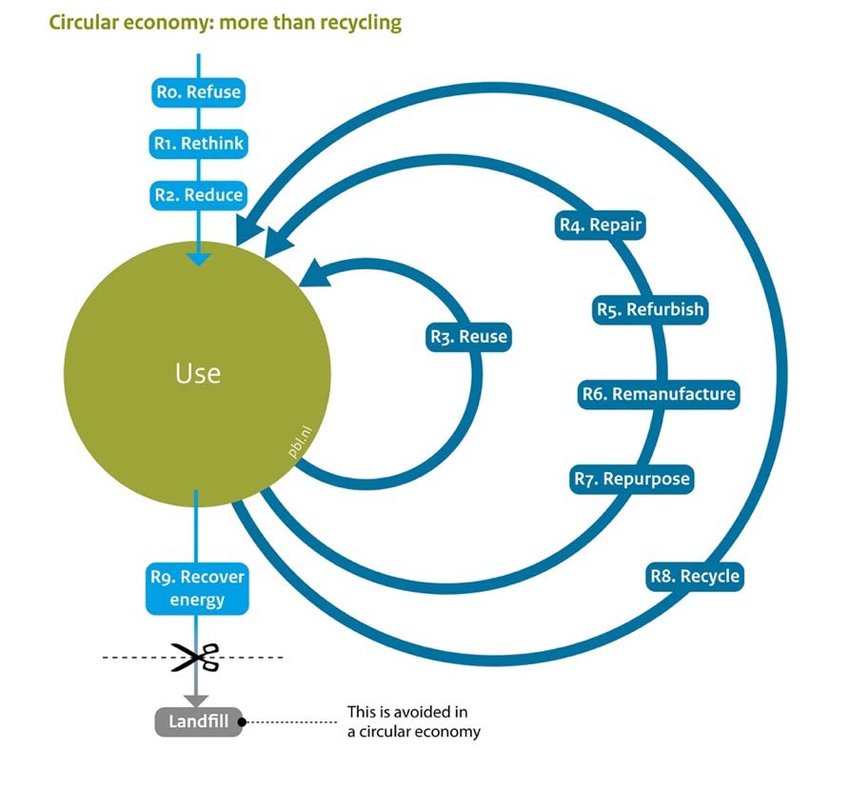
Recycling tends to get the most attention, but it is only one piece of a much bigger picture. A truly circular approach to facility management also means rethinking, reducing, reusing and repairing. These steps extend an asset’s useful life before it needs recycling or replacement.
In practice, this might mean refurbishing desks, screens or laptops at the end of their first life instead of discarding them. It could also mean repurposing a desk that is no longer needed as a workstation and turning it into a compact meeting area.
Circularity also supports modular design, where technicians replace only the worn part of an asset rather than the whole item. This lowers costs and extends the working life of furniture and equipment across the board.
Putting circular facility management into practice
Purchasing versus leasing
One of the first decisions in circular facility management is whether to purchase furniture outright or lease it. Purchasing keeps maintenance and replacement under the company’s own control. Leasing shifts that responsibility to a provider and also offers an additional follow-up option.
A short lease gives you more flexibility at a higher cost, while a long lease lowers the cost but reduces flexibility.
Choosing a maintenance approach
There are four common approaches to replacing assets:
- Reactive: replace an item once it breaks.
- Planned or preventive: replace an item at a set time, before it breaks.
- Condition-based: replace an item once its condition requires it.
- Just-in-time: a combined strategy that draws on the best of the first three.
To choose wisely, decision makers need a dashboard with a full furniture list, purchase dates, usage and a summary of current condition. Without that data, it is difficult to know which investment actually delivers the best return.
Relocation and office moves
Few situations expose the gaps in an asset inventory faster than an office move. Larger organizations often operate across many locations, mergers add more furniture to track, and changing workplace concepts affect what you actually need. All of this makes it harder to know which furniture you have and what condition it is in.
Before a move, facility managers need to know whether current furniture fits the new space and what its remaining value is. They then decide what to resell, what to reuse and what to mark for disposal.
A Facility Management Information System (FMIS) can help here, but on its own it often falls short. Most systems do not track condition or reuse potential, and inventory accuracy tends to drop over time as staff, furniture and workplace needs change. That is why an annual inventory update, rather than a one-time project, usually gives the most reliable results.
Getting started with circular facility management
The path into circular facility management always starts in the same place: knowing what you have. A well-maintained workplace asset inventory helps facility managers plan long-term investments and apply responsible procurement, while cutting purchasing costs and carbon emissions.
From there, choosing the right tactics becomes much easier:
- Restore and refurbish existing furniture.
- Lease furniture rather than purchasing it outright.
- Swap out worn components instead of entire items.
- Prepare in advance for relocations.
Circularity is not a short-term project. It is a shift in how a company thinks about the assets it already owns. Organizations that build that foundation today will be better prepared to meet rising environmental goals and cost pressures.
Take the first step toward circular facility management
A workplace asset inventory is the first step toward circular, cost-efficient and future-proof facility management. Contact us to discuss how a workplace asset inventory could support your facility management strategy.